
It comes down to density, not appearance
On a showroom wall, porcelain and ceramic tile can look almost identical — often deliberately so, since manufacturers make both in matching colorways. The real difference is in the clay body: porcelain is fired at a higher temperature from a denser, more refined clay, giving it water absorption typically under 0.5%, compared to ceramic's more porous body.
Where that difference actually matters
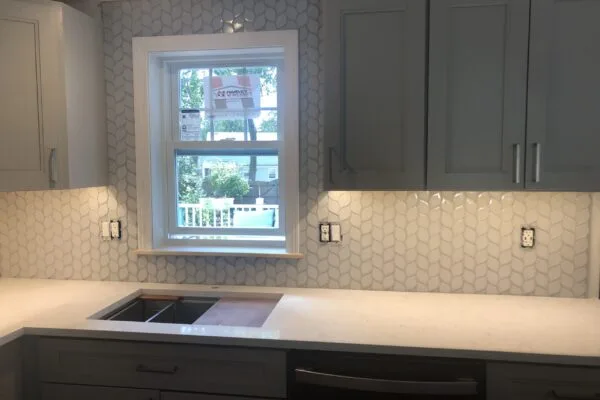
For a kitchen backsplash that only sees the occasional splash, that density difference is nearly irrelevant — ceramic will perform fine, cost less, and be easier to cut around outlets and corners. For a shower floor or a mudroom that sees standing water and daily boot traffic, porcelain's lower porosity earns its higher price.
Our rule of thumb
If it's vertical and indoors — a backsplash, a tub surround, a feature wall — ceramic is usually the more economical, equally attractive choice. If it's horizontal, wet, or exterior-facing, porcelain is worth the upcharge. We walk through this trade-off with every client before they commit to a material.